
Like a lot of people, I didn’t grow up understanding investing. Stocks, crypto, market cycles — all of it sounded like something rich people or financial experts did. I was just trying to make smart decisions for my family and survive the uncertainty of the pandemic.
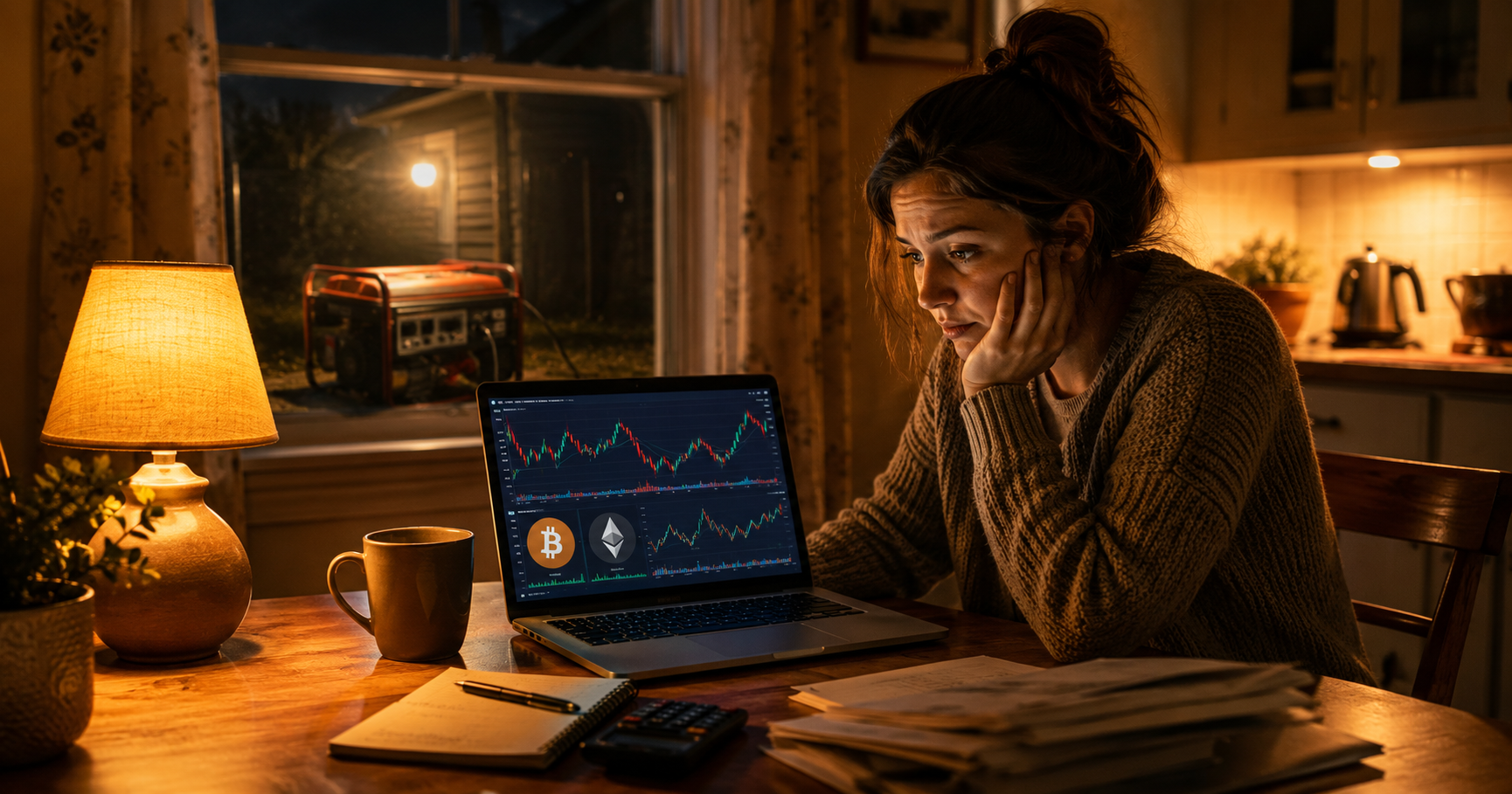
Ironically, the thing that pushed me into investing wasn’t some brilliant financial plan. It was a whole home generator.
During COVID, my wife and I received stimulus money, and we decided to use it on something practical. We bought a generator for the house. At the time, it felt responsible. The world was weird, supply chains were shaky, and having backup power seemed like a smart move.
Then one day I read one of those articles that changes your brain chemistry a little.
It said something like:
“If you had invested your stimulus check into Dogecoin, it would now be worth $128,000.”
Suddenly I started thinking:
“What is Dogecoin?”
“How do you even buy crypto?”
“Did regular people really make this kind of money?”
I had absolutely no clue what I was doing.
So naturally, I did what most beginners do….. I Googled it.
One of the first platforms I found was Webull, so I opened an account and bought a couple hundred Dogecoin at around 50 cents each. At one point it climbed to about 70 cents, and I thought I was a genius investor.
Then it stalled.
And mostly stayed stalled.
That was my first lesson:
Just because something goes viral doesn’t mean it keeps going up forever.
But instead of slowing down and learning, I went deeper into what I now call the “hopium phase” of investing.
After Dogecoin, I discovered Shiba Inu.
I bought millions of tokens, around 40 million of them. I remember telling my wife:
“If this thing ever reaches ten cents, we’ll be rich.”
In my mind, it made perfect sense.
Bitcoin was worth tens of thousands of dollars, so why couldn’t Shiba eventually hit a ten cents?
What I didn’t understand yet was market cap.
I didn’t understand token supply.
I didn’t understand liquidity.
I didn’t understand how unrealistic some price targets actually are.
I was chasing dreams instead of understanding math.
And honestly, that’s probably where a lot of new investors start.
The crypto world is full of people selling hope:
- “This coin will 1000x.”
- “Financial freedom is right around the corner.”
- “Don’t miss the next Bitcoin.”
That kind of thinking can make you ignore reality.
Eventually I came across videos from Graham Stephan on YouTube. One thing he said really stuck with me:
The safest long-term crypto investments are usually projects already in the top 10.
That simple idea helped straighten my thinking out.
Instead of hunting lottery tickets, I started paying attention to:
- adoption
- utility
- long-term survival
- market size
- risk management
I stopped trying to become instantly rich and started thinking more about probability.
That shift changed everything.
I’m still learning.
I still make mistakes.
I still get excited about new ideas sometimes.
But I’m no longer blindly throwing money at hype and hoping for miracles.
That’s really what this site is about.
I’m not a Wall Street analyst or a financial wizard. I’m just a regular person documenting the journey — learning about markets, crypto, fear and greed, world events, politics, and even alternative indicators like astrology along the way.
Some ideas will work.
Some won’t.
But the goal is to learn openly, think critically, and hopefully help other people avoid some of the mistakes I made when I first started chasing hopium